Showing posts with label Oceania. Show all posts

Sunday, April 7, 2024

Samoa - Where We Once Belonged

Country: Samoa               
Book: Where We Once Belonged
Author: Sia Figiel
Publication Year: 1996
Genre: Fiction

Sia Figel’s 1996 novel, Where We Once Belonged, holds the distinct honour of being the first book published in the United States written by a female Samoan author. The honour is also somewhat dubious. Rather like Octavia E Butler being the first American women of colour to publish a work of speculative fiction (1977’s Patternmaster), it is depressing how recently it happened.

Where We Once Belonged is on one level a simple coming of age tale. It uses a traditional Samoan storytelling technique, su'ifefiloi, which, as I understand it, involves sewing or weaving together different parts (the word derives from the weaving together of a garland of flowers). In employing this technique, Figiel attempts to counter the lazy stereotypes of western anthropological studies of Samoa and the sexualisation and fetishisation of Pacific island women n general (“Gauguin is dead! There is no paradise!’”).

In another sense, the novel conforms to storytelling techniques found throughout the world, some of which we have already discussed in this project. In following the story of thirteen year old Alofa Filiga, as she navigates the pitfalls of puberty and village life within Samoan society, we are harking back to other tales of village and small town living. In A Grain of Wheat in particular (see: Kenya), Ngugi Wa Thiong'o weaves together the parallel narratives of his villagers to give a comprehensive overview of events during and in the years following the Mau-Mau Rebellion.

Ngugi’s, however, is a simple act of narrative prose storytelling. Figiel weaves poetry into the various tales that hang together on a central stem (though there are various examples of prose/verse mixtures used in western literature, of which Dante’s Vita Nuova is perhaps the best example).

But this is also a form of expression seemingly more widely used in Pacific island writing than would perhaps be allowed in other parts of the world. In considering the academic work of Epeli Hauʻofa (see: Tonga) and Teresia Kieuea Teaiwa (see: Fiji), we have read collections of essays that include pauses for poetry between the weightier academia in a way that one wouldn’t find in the work of Noam Chomsky, say. Indeed, Figiel and Teaiwa released an audiobook together of poetry and song (Terenesia) in 2000. Another link in the chain that takes us from Hauʻofa to Teaiwa and on to Figiel.


Other universal themes rear their heads. Sexual awakening. The male gaze. Christianity and its scapegoating of women for being the objects of male lust. The cruel and cliquey nature of adolescent children and young women. The ghost of colonialism that casts a long shadow, as it does everywhere, with the fetishisation of the Pacific called out in its references to Gauguin, but also Robert Louis Stevenson, who spent time living on Samoa during his three year voyage among the islands of the Pacific.

There is an irony that western travellers saw the Pacific islands as some kind of prelapsarian idyll, full of dusky maidens, unaware and unashamed of their nakedness. Then the missionaries arrived, bringing with them Christianity and concepts of original sin that destroyed Eden in the process. 

 We see its toxic after-effects throughout Where We Once Belonged. Alofa being ostracised because a man looks lustfully at her in church: Idle gossip: Demonisation of those on the fringes of village society: People casting the first stone left, right and centre. Like the inhabitants of Salem, Massachusetts, sin and satanic influence are conjured in the collective imagination and punished with the shaving of Alofa’s head. Yet the usual male indiscretions take place, powered by patriarchal rule, with no repercussions (see: Afghanistan, Eritrea, Somalia and most of the rest of the Reading the World project for further examples).

All in all, Where We Once Belonged is a decent enough novel. Unique yet universal. Employing stylised local narrative techniques, but weaving in themes and methods that are used the world over and which have probably been in development since the birth of oral storytelling.

This is not the last Samoan book we shall encounter in this journey, I am sure. There is the work of Albert Wendt, for a start, whose name floats above these Pacific island entries like a shearwater flitting from island to island. And as we return to these places in future journeys, we are bound to find Samoa in the backwash of other Pacific island shores.

Sia Figiel


Wednesday, April 3, 2024

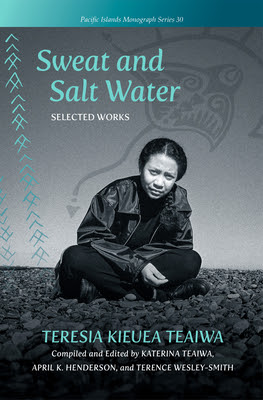
Fiji - Sweat and Salt Water

Country: Fiji           
Book: Sweat and Salt Water
Author: Teresia Kieuea Teaiwa
Publication Year: 2021
Genre: Essay /Poetry/Academia

We sweat and cry salt water, so we know that the ocean is really in our blood. —Teresia Kieuea Teaiwa

If Epeli Hauʻofa (see: Tonga) and his pioneering anthropology gives us a bird’s eye view of the Pacific islands and their peoples, Teresa Teaiwa academia zooms in on the issues facing the nations of the region.

Published in 2021, four years after Teaiwa’s untimely death at 48, Sweat and Salt Water collects  together a number of her most influential essays, organised into sections covering Pacific Studies, Militarism and Gender and Native Reflections. Through these essays, Teaiwa drills down into discussions of the history and problems in defining Pacific Studies, the challenges teaching the subject and in engaging students, as well as the consequences of western colonisation and the stain, cultural and environmental, left by US and UK nuclear testing in the region.

What is refreshing about Teaiwa’s writing is she is never afraid to insert herself and her lived experiences into her writing. The great problem with much academic writing, especially that written by western academics, is it tends to be written from ivory towers, where subjective opinion is presented as objective fact. Yet academic research is a moveable feast, continuously beieng reassessed and evolving as new data come to light.

As Teaiwa refers to Howard Zinn in her essays, I will once again make reference to Zinn’s idea that history is an infinite chain of events. To tell any story, historic or fictional, one must cherry pick from those events in order to weave a coherent narrative. How one chooses which events to focus upon is a subjective process decided by demographics and upbringing. How you tell a story depends entirely on where you come from.

As such, a US historian writing about the Vietnam War will have a very different opinion on those events than a Vietnamese academic. A European historian will write about 19th century colonialism from a different perspective than the descendents of the people who were subject to its brutality and oppression.

As we have discussed before in this project, there has been a plaintive cry amongst western commentators in recent years that “they are erasing our history.” This is a disingenuous attempt to preserve the western narrative that European colonialism was all japes and good fun and no-one really got hurt (“at least no-one that mattered”, to paraphrase Douglas Adams) and everyone was delivered to Christ, so what are you bleating about anyway? Mention slavery or the massacre of indigenous populations and you are “doing this country down” as if it needed any help. By “erasing our history” what they really mean is: Asking the victims of those events how they feel about them.


Teresa Teaiwa was born in Hawai’i to an African-American mother and a father from the Banaban people of Kiribati. She grew up in Fiji, studied in Washington DC and California and was teaching in New Zealand at the end of her life. She assimilated  “European political thought from Plato to Marx.“ She therefore had a rich matrix of cultural vectors from which to approach the history and politics of the region. She didn’t have the (white) privilege of separating herself from those issues.

While Teaiwa‘s writing is academic and professional, almost to a fault, there is often an undertone of irony and cynicism at institutionalised attitudes to the Pacific region and its population. If you live it, you attitude will be much different from those who pronounce on the lives of others without experiencing them , or, in many cases, even visiting the places on which you presume to opine. A little sarcasm and world weariness is entirely appropriate. It is genuine. It is honest.

‘Bellwether’ is a photographic project by my friend, John Harrison, for which I have contributed a number of pieces of writing over the last few years. The project focuses on three Lancashire towns (known as the ‘Three Towns’) in Northern England. John takes portraits of people in the area to show how they live, work and relax. I coined the term, Bellwether (employed it, more accurately), to refer to those places on the margin of British life. They seem peripheral to the national consciousness, but when taken as a collective of similar sized towns across the UK, they have a greater population than any city other than London. What happens there is a microcosm for what will eventually happen everywhere.

The Pacific is similar, though on a much greater scale. There are somewhere in the region of 20,000 islands across the world’s largest ocean. Like Great Harwood or Mold or Ross-on-Wye, the islands of Kiribati, Micronesia and Papua New Guinea are Bellwether nations for what is to come for the human race. Climate change will effect these places sooner than New York, Paris or Beijing, as they slowly disappear beneath the rising waters. We should look at how the world, how the dominating colonial countries of Australia and New Zealand, treat these countries and ask ourselves if we will be treated any differently when the time comes. These s/pacific n/oceans, as Teaiwa refers to the militarisation of the region, should worry us all.

While the Bellwether towns of Britain are separated by rivers and motorways and hills and mountain ranges, the Pacific Bellwethers are separated only by the ocean. The distances between them are on a whole other scale, but they are, in an important sense, almost claustrophobically close. If it snows in Ross-on-Wye, it might be raining in Great Harwood. When oceans levels rise in Kiribati, they will rise everywhere, and not just in the Pacific. The islands of the Caribbean and the Indian Ocean will feel in too.

There is a kind of wave-particle duality about the islands and the people of this region. Epeli Hauʻofa was born in Papua New Guinea to Tongan parents, but worked for much of his life in Fiji. Teresa Teaiwa was born in Hawai’i but grew up in Fiji. In making her representative of Fiji, it is an unsatisfactory compromise. The easy choice would be to place her in Kiribati, but I would be doing so merely to meet a quota and tick off another country. What I have learned (or think I have learned) so far is that no one in the Pacific region entirely belong to one island or nation.

As this project progresses, I hope individual writers will spread out like a heat map charting the rise of global temperatures to cover most of the region. The western toxic obsession with categorising and pigeonholing of everything leads me to place the authors I read to one country or another. But like a series of unobserved particles passing through the notorious double slit experiment, if we wait long enough, they will form an interference pattern on our memory and imagination. Hauʻofa spreads out from Tonga; Teaiwa from Fiji. Subsequent writers will overlap with them and fill in the gaps. Needless to say that like Nigerian science fiction, or the rich literature of Trinidad and Tobago, the island nations of the Pacific will be the subject of a longer essay at some point in the future.

I feel like I have said very little about Teaiwa’s actual writing here, but that’s ok. These sketches do not conform to any set format. The best writers, the best thinkers and their ideas are the ones that set off a cascade of thoughts in the mind of the reader that lead them to unimagined places.

This can have unintended consequences of course. But as Howard Zinn reminds us, experience and influence vary from person to person. We cannot control how others react to internal stimuli, merely try to ensure our own reactions to the world are constructive and not self-deluding. Teresa Teaiwa is not someone who seemed to suffer much from delusion, but was grounded in the world, region and discipline in which she lived and worked.

There are some writers on this journey for whom I will read one or two books and never return to them after I am done (though I would never be so gauche as to tell you who they are). Teresa Teaiwa is not one of those writers. Like We Are the Ocean (see: Tonga), the title essay of which begins with Teaiwa‘s words quoted at the start of this piece and from which this collection takes its name, Sweat and Salt Tears is a work to which I will refer to whenever I return to the literature and thought from the region. Further collections of Teaiwa’s writings are planned for release.  They are most welcome. Anyone interested in the region could do worse than start by reading We Are the Ocean and Sweat and Salt Tears. Like the Pacific itself, they should be propagated far and wide.

Teresia Kieuea Teaiwa


Monday, April 1, 2024

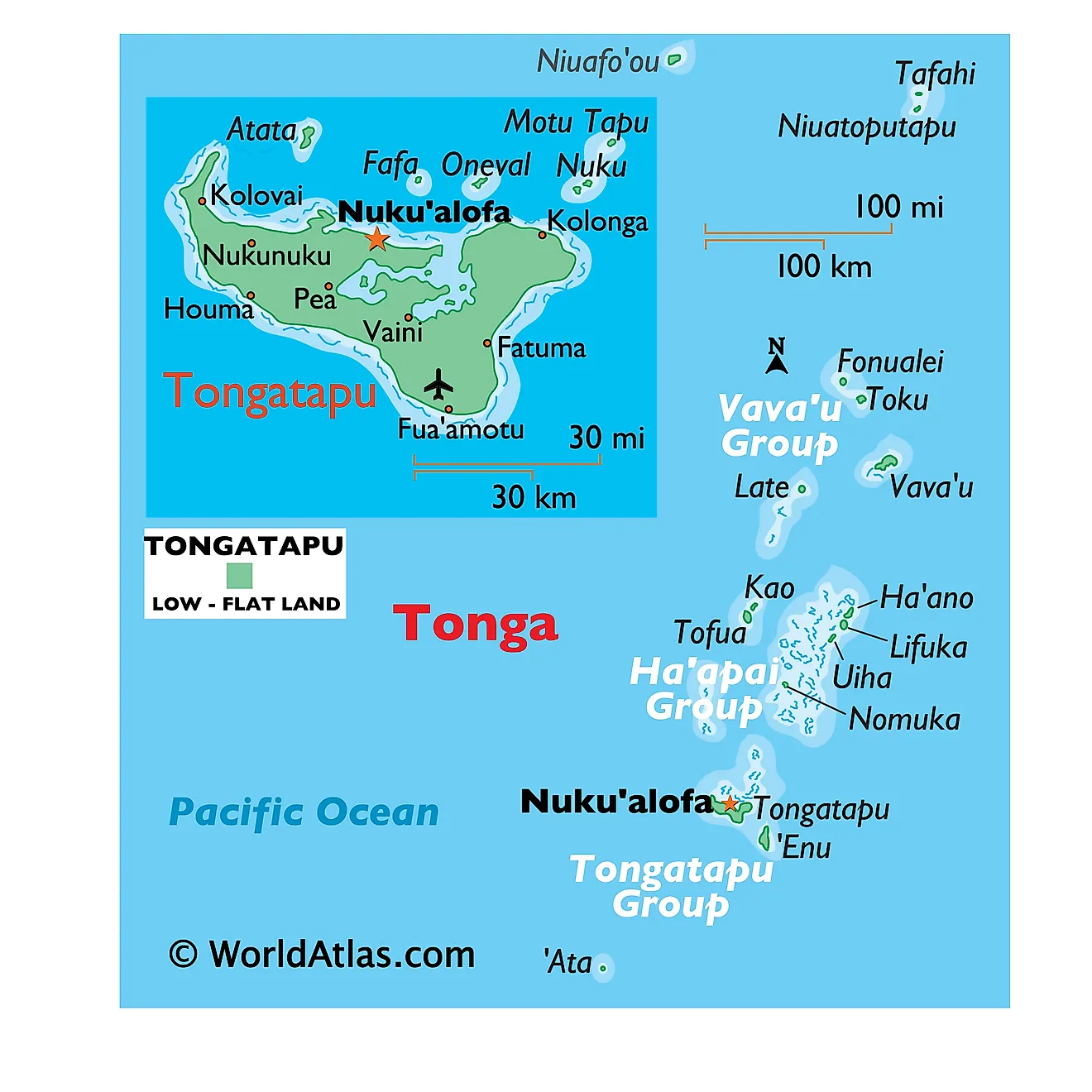
Tonga - We Are the Ocean

Country: Tonga      
Book: We Are the Ocean
Author: Epeli Hauʻofa
Publication Year: 2008
Genre: Essay/Anthropology/Fiction/Poetry

Writers and thinkers like Epeli Hauʻofa are the reason why I set out on this journey. Born in Papua New Guinea to Tongan Missionary parents, Hauʻofa was an anthropologist, poet and novelist who wrote and lectured about the island nations of the Pacific. As we take a first trip through Oceania in the next three entries, there is no better person to be our guide.

We Are the Ocean, published in 2008, a year before Hauʻofa’s death, is a collection of essays, as well as poetry and extracts from his novel 1987, Kisses in the Nederends.

As an anthropologist native and resident to the regions about which he wrote, Hauʻofa’s work did much to correct the racist stereotypes found in western research and academia on Oceania and its nations. In the pacific, Australia and New Zealand loom large, as do the western coastlines of Canada and the United States. Their influence casts a long shadow over the rest of the Pacific Ocean. Hauʻofa was one of the first indigenous academic voices to push back against western tropes about the island nations of Oceania.

Those tropes loom large in the west, sexualising and infantilising the peoples of the Pacifica Island Nations. When we think of the islands at all, it is of James Cook’s crew trading iron nails for sex with Hawaiian women; of Gauguin’s paintings of topless Tahitian beauties; or of Herman Melville jumping ship in ‘Typee’ to explore and lie amongst the people of the Marquesas Islands in modern day French Polynesia.

Colonialist language is also slow to be replaced. When Hauʻofa was starting out as an anthropologist, terms like the South Sea and South Pacific were still being bandied about and applied to the region. In these and other terms we see an attempt to belittle and reduce the size of the region which, at its widest, spans fully one half of the entire circumference of the globe. 

A Colonial View of the Pacific Ocean Islands
Partly this is because so little of Oceania is made up of land mass or independent states. Asides from Australia and New Zealand, only 11 Pacific island and island groups have a seat in the UN:

Fiji, Kiribati, the Marshall Islands, The Federated States of Micronesia, Nauru, Palau, Papua New Guinea, Samoa, the Solomon Islands, Tonga, Tuvalu and Vanuatu.

Yet there are just as many (more in fact) Pacific islands that are not independent, but overseas dependencies of other, mostly western, nations:

American Samoa (USA), Cook Islands (New Zealand), French Polynesia (France), Wallis and Futuna (France), Guam (USA), Hawai’i (USA state), the Marianas (USA), Western New Guinea (Indonesia), New Caledonia (France), Niue (New Zealand), Norfolk Island (Australia), Pitcairn Island (UK), Rapanui/Easter Island (Chile), and Tokelau (New Zealand)

I am sure this list in not exhaustive, but based on Hauʻofa’s own notes, in which he does away with simplistic colonial divisions of the Pacific into Melanesia, Micronesia, and Polynesia and replaces them with North Oceania, West Oceania, East Oceania and Central Oceania, which at least gives a better sense of the sheer size of the Pacific.

Yet we also see from the two lists of independent and non-independent Oceanic islands presented above, that the region remains under the thumb of the usual global suspects. Of the non-independent territories, only Hawai’i, as the 50th state of the United States of America, wields any power (unlike its Atlantic counterpart, Puerto Rico). The rest are historically used as places to test nuclear weapons with little thought given to the consequences for the people who live there. As the oceans rise, the Pacific islands are the place that will disappear beneath the waves first, with the same lack of concern demonstrated by those driving climate change.

If you want a true accounting of a society, you have to look to the margins and how it treats the people there. Oceania is perhaps the ultimate margin, vast but virtually unpopulated. Even the major population centres of Australia and New Zealand are virtually, actually empty, unlike, say, the Americas, which are still described as empty by western commentators to disguise the fact that European expansion into the region killed 80-100million people from the diseases they brought with them. Yet we only have to look to the treatment of the Maori and indigenous Australians to see density of population is no barrier to racism.

Hauʻofa’s writing is a touchstone, a way-station and a place to orientate ourselves before looking at what the writers of Oceania have to tell us. It is also a further reminder, should it be needed, that a country is an arbitrary boundary and can act as no more than a guide to Reading the World. We can’t be content just to read the 13 Oceanic countries represented in the UN. Tahiti has just as much to offer as Samoa; the Cook Islands as much as Kiribati.

Hauʻofa’s own fiction contributes to this understanding as much as his work in anthropology. He wrote one major novel, Kisses in the Nederends, two extracts of which make up part of We Are the Ocean, as well as other works of fiction. He was also a poet, writing about the experiences of Pacific island peoples.

Indeed, the arbitrary nature of national boundaries fall apart when trying to locate Epeli Hauʻofa to any one country. He was born in Papua New Guinea and attended school there, but spent much of his academic career in Fiji. He worked for some time as adviser to the Tongan king, Täufa‘ähau Tupou IV, as the keeper of the palace records. He is buried in Fiji, but I have chosen him to represent Tonga. Yes, it is arbitrary, but that is one of the limitations of such a project as this. However, sometimes you just have to choose, even while remaining unhappy with your choices.

The fact of the matter is that Hauʻofa spans the Pacific like a colossus. We Are the Ocean becomes and remains important reference material whenever we return to this region of the world. But one point is not enough to be able to navigate and set a course. So next we turn to another Pacific island scholar and poet. To Fiji and Teresia Teaiwa.

Epeli Hauʻofa